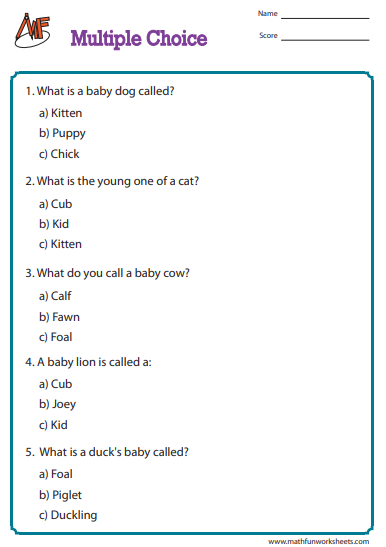
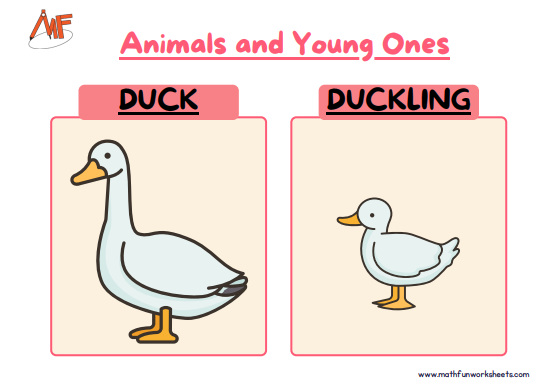
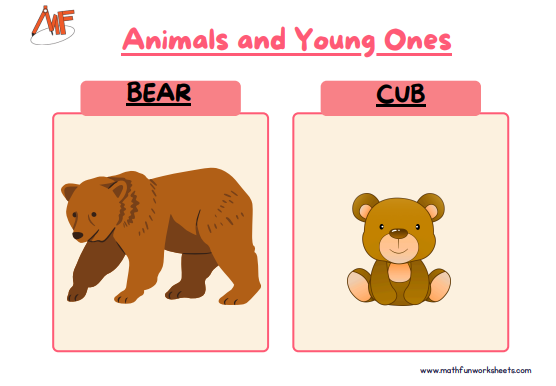
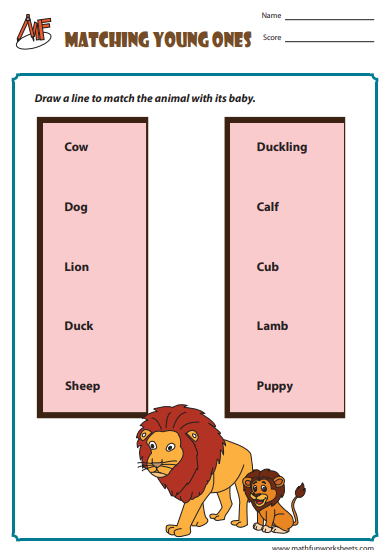
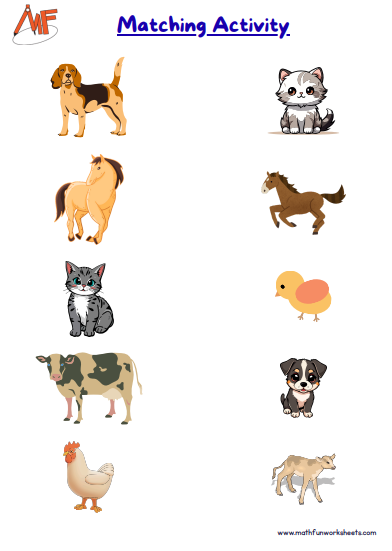
Animals and Their Young Ones Worksheets help children learn animal names and the names of their babies. For example, kids can learn pairs such as cow and calf, dog and puppy, and cat and kitten. In addition, matching activities make it easier to remember new words. These worksheets are ideal for preschool and kindergarten learners. Moreover, children can improve vocabulary and animal recognition while having fun.
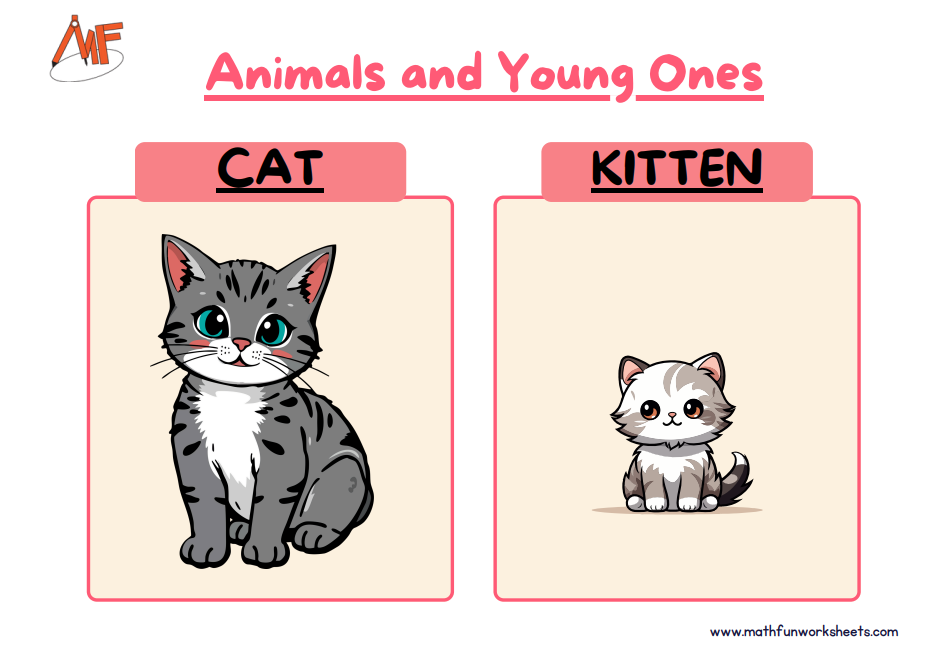
Each worksheet is designed with colorful images and interactive tasks. Kids can match animals with their babies, label them, and even color them. For example, they learn that a cat’s baby is a kitten, and a cow’s baby is a calf. These basic facts help build a strong science foundation.
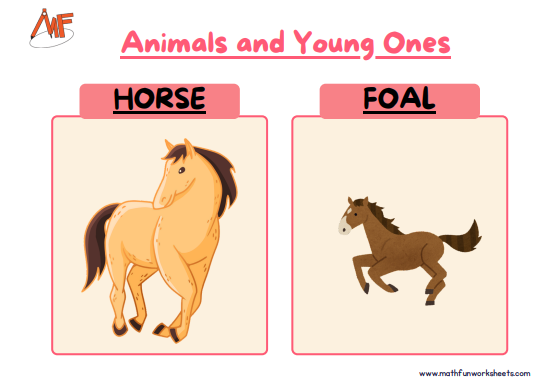
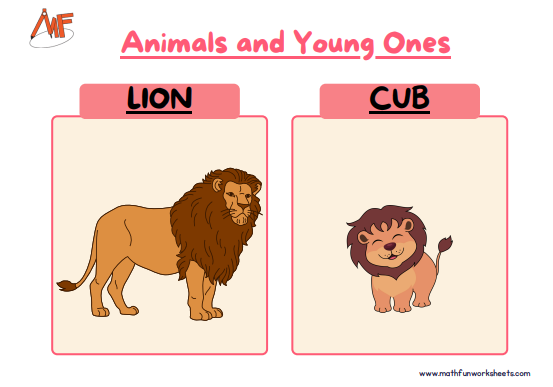
It also helps children build their vocabulary. Words like cub, joey, foal, and duckling are introduced through easy activities. As kids explore, they also improve their reading and memory skills.
Children can learn animal names and their babies with these worksheets. They begin to notice the differences and similarities between various animal families. For example, birds hatch from eggs, while mammals give birth to live babies.
The topic of animals and their young ones also encourages children to ask questions. Why do some animals carry their babies? Why do some build nests? These questions create curiosity and open the door to more learning.
Explore more [preschool worksheets], [matching worksheets], and [learning worksheets for kids] to give children more fun practice activities.
Perfect for preschoolers, these worksheets make learning fun. Whether used at home or in the classroom, they fit well into any science curriculum. Teachers can use them for activity time. Parents can use them for revision or homework.
In short, these worksheets make science exciting and meaningful. Learning about animal families has never been this easy. Download and print today to get started!
Young ones are the babies or offspring of animals. Different animals have different names for their babies.
A baby dog is called a puppy.
A baby cat is called a kitten.
A baby cow is called a calf.
These worksheets are suitable for preschool, kindergarten, early learners, teachers, and parents.
Copyright © 2026 – Math Fun Worksheets