Search

English Worksheets

Sense Organs Worksheets

Sense Organs

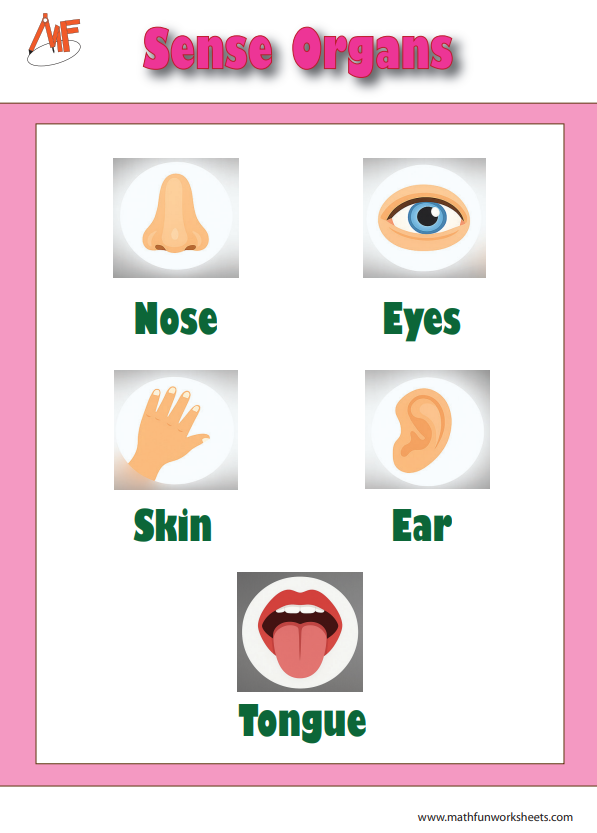
Home Kids Corner Sense Organs Worksheets Five Sense Organs Worksheets Learning about the five sense organs is fun and exciting for kids! These worksheets help children understand how the five senses – sight, hearing, smell, taste, and touch – work in everyday life. These printable science worksheets make learning easy, engaging, and interactive. Each worksheet introduces a sense organ and its function. Kids will learn that eyes help us see, ears help us hear, nose helps us smell, tongue helps us taste, and skin helps us feel. Simple pictures and activities make the topic clear and fun to explore. Moreover, the worksheets include matching tasks, labeling exercises, and hands-on science activities. These help students observe and identify how their body responds to the world. Step by step, children develop curiosity and awareness through playful learning. Teachers can use these five senses worksheets in classrooms or science labs. Parents can also download and print them for home learning. Every worksheet is designed for preschool, kindergarten, and grade 1 students. Download Free Five Sense Organs Worksheets Explore more free science worksheets for kids at MathFunWorksheets. After learning about the five sense organs, children can continue exploring science topics with our Human Body Parts Worksheets, Parts of a Plant Worksheets, Animals and Their Homes Worksheets, and other engaging Science Worksheets. These printable activities help children build science vocabulary and understand the world around them. Related Worksheets ➜  Parts of the body ➜  Sense Organs ➜  Animals and their Homes ➜  Animals and their Babies ➜  Animal Habitats ➜  Classifying Animals ➜  Types of Animals by Food ➜  Life Science Printable Charts ➜  Living Things Worksheets ➜  Earth and Space Science ➜  Physical Science ➜  Day and Night Worksheets ➜  Weather and Seasons Frequently Asked Questions 1. What are sense organs? Sense organs help us understand and respond to things around us through sight, hearing, smell, taste, and touch. 2. What are the five sense organs? The five main sense organs are the eyes, ears, nose, tongue, and skin. 3. What do children learn from sense organs worksheets? Children learn to identify the five sense organs and understand how each one helps us experience the world. 4. Who can use these five senses worksheets? These worksheets are suitable for preschool, kindergarten, and elementary students. 5. Are the sense organs worksheets free? Yes, MathFunWorksheets offers free printable sense organs worksheets for kids.

Animals and their Homes

Home Kids Corner Animal and their Young Ones Animals and Their Homes Chart for Kids Learning about animals and their homes chart is one of the most exciting topics for young learners. It helps children understand where different animals live, how they build their shelters, and why each home is unique. Our free printable charts are perfect for classrooms and home learning activities. Each chart includes colorful pictures and clear names, making it easy for kids to match animals with their shelters — like a dog in a kennel, a cow in a shed, a bird in a nest, or a lion in a den. These animals and their shelters worksheets are designed to improve observation skills, vocabulary, and environmental awareness in a fun and interactive way. Teachers and parents can use these free printable charts  for matching exercises, classroom wall displays, or learning games. The charts cover both domestic and wild animals, helping children identify the difference between farm animals, pets, and jungle animals and where they live. These charts are available for easy download in printable PDF format. They’re colorful, engaging, and designed especially for preschool, kindergarten, and grade 1 students. Animals and Their Homes – Fun Learning Worksheets for Kids Download now and make learning more visual and exciting! Help your child or students discover amazing facts about the homes of animals — from burrows and dens to nests and aquariums — with our creative and educational animals and their homes worksheets. Related Worksheets ➜  Parts of the body ➜  Sense Organs ➜  Animals and their Homes ➜  Animals and their Babies ➜  Animal Habitats ➜  Classifying Animals ➜  Types of Animals by Food ➜  Life Science Printable Charts ➜  Living Things Worksheets ➜  Earth and Space Science ➜  Physical Science ➜  Day and Night Worksheets ➜  Weather and Seasons Frequently Asked Questions 1. What are Animals and Their Homes worksheets? These worksheets help children learn where different animals live by matching animals with their homes or shelters. 2. What animals can children learn about? Children may learn about animals such as dogs, horses, birds, lions, bees, rabbits, cows, chickens, and fish. 3. What do children learn from these worksheets? Kids develop animal vocabulary and learn about different animal homes, shelters, and habitats. 4. Who can use these animal worksheets? They are suitable for preschool, kindergarten, and elementary students. 5. Are Animals and Their Homes worksheets free? Yes, MathFunWorksheets provides free printable worksheets for children to practice and learn.

Animals and their Young Ones Worksheets

Animals and their Young Ones

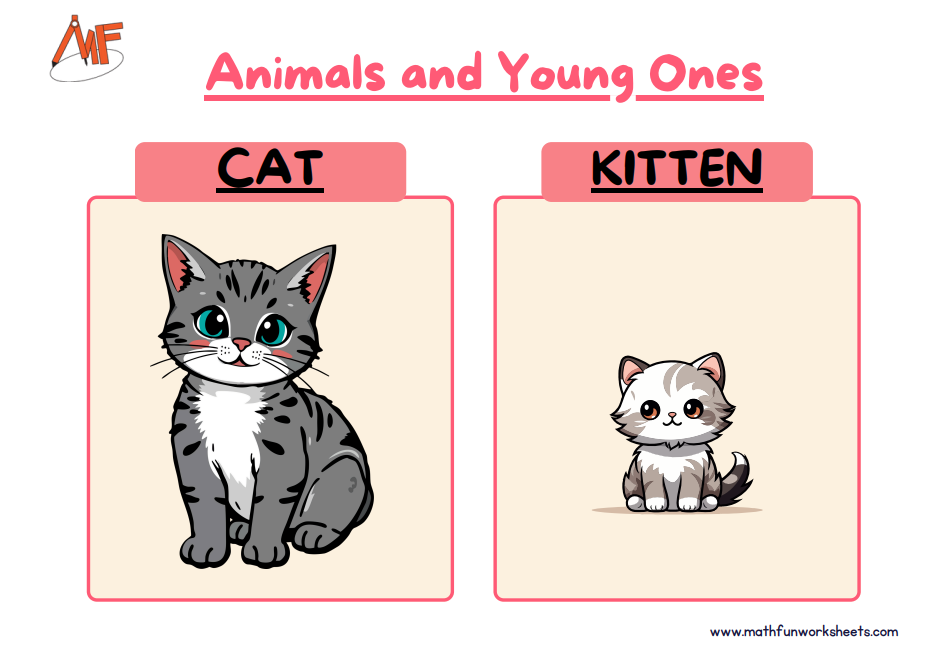
Home Kids Corner Animal and their Young Ones Animal and their Young Ones Worksheets Animals and Their Young Ones Worksheets help children learn animal names and the names of their babies. For example, kids can learn pairs such as cow and calf, dog and puppy, and cat and kitten. In addition, matching activities make it easier to remember new words. These worksheets are ideal for preschool and kindergarten learners. Moreover, children can improve vocabulary and animal recognition while having fun. Each worksheet is designed with colorful images and interactive tasks. Kids can match animals with their babies, label them, and even color them. For example, they learn that a cat’s baby is a kitten, and a cow’s baby is a calf. These basic facts help build a strong science foundation. It also helps children build their vocabulary. Words like cub, joey, foal, and duckling are introduced through easy activities. As kids explore, they also improve their reading and memory skills. Children can learn animal names and their babies with these worksheets. They begin to notice the differences and similarities between various animal families. For example, birds hatch from eggs, while mammals give birth to live babies. The topic of animals and their young ones also encourages children to ask questions. Why do some animals carry their babies? Why do some build nests? These questions create curiosity and open the door to more learning. Discover Animals and Their Young Ones – Engaging Worksheets for Kids Explore more [preschool worksheets], [matching worksheets], and [learning worksheets for kids] to give children more fun practice activities. Perfect for preschoolers, these worksheets make learning fun. Whether used at home or in the classroom, they fit well into any science curriculum. Teachers can use them for activity time. Parents can use them for revision or homework. In short, these worksheets make science exciting and meaningful. Learning about animal families has never been this easy. Download and print today to get started! Related Worksheets ➜  Parts of the body ➜  Sense Organs ➜  Animals and their Homes ➜  Animals and their Babies ➜  Animal Habitats ➜  Classifying Animals ➜  Types of Animals by Food ➜  Life Science Printable Charts ➜  Living Things Worksheets ➜  Earth and Space Science ➜  Physical Science ➜  Day and Night Worksheets ➜  Weather and Seasons Frequently Asked Questions 1. What are young ones of animals? Young ones are the babies or offspring of animals. Different animals have different names for their babies. 2. What is a baby dog called? A baby dog is called a puppy. 3. What is a baby cat called? A baby cat is called a kitten. 4. What is a baby cow called? A baby cow is called a calf. 5. Are Animals and Their Homes worksheets free? These worksheets are suitable for preschool, kindergarten, early learners, teachers, and parents.

Animal Habitats Worksheets

Animal Habitats Worksheets

Home Kids Corner Animal Habitats Worksheets Animal Habitats Worksheets Help your child explore the amazing world of animals and where they live. Our animal habitat worksheets are made just for kids. These worksheets are fun, colorful, and easy to understand. Children will learn about different places animals call home. Forests, deserts, oceans, jungles, and even the Arctic! Each worksheet includes matching games, coloring tasks, and sorting activities to keep learning fun. Kids can match animals to their habitats, color forest scenes, or circle desert animals. Every page is designed to support early science skills. Teachers and parents love how these worksheets boost curiosity and knowledge. Learning about habitats helps kids understand nature better. It builds vocabulary, observation skills, and critical thinking. Whether your child is in preschool or early elementary school, these worksheets will be a great fit. You can print and use them at home or in the classroom. They are perfect for homework, science centers, or just for fun learning time. Our animal habitat worksheets are also aligned with early learning standards. That means your child is learning the right content at the right age. Start today! Download and print our free or premium worksheets. Give your kids a head start in science. Animal Habitats Worksheets Download Why Kids and Parents Love These WorksheetsEasy to followColorful and engagingHelps with science vocabularyFun for both school and home So, if you’re looking for a simple way to teach science, these worksheets are a perfect choice. In fact, they make learning feel like playtime. Moreover, they are ideal for early learners who need visual and hands-on activities. After learning about animal habitats, children can explore Classifying Animals Worksheets to identify animal groups and Types of Animals by Food Worksheets to learn about herbivores, carnivores, and omnivores. Related Worksheets ➜  Parts of the body ➜  Sense Organs ➜  Animals and their Homes ➜  Animals and their Babies ➜  Animal Habitats ➜  Classifying Animals ➜  Types of Animals by Food ➜  Life Science Printable Charts ➜  Living Things Worksheets ➜  Earth and Space Science ➜  Physical Science ➜  Day and Night Worksheets ➜  Weather and Seasons Frequently Asked Questions 1. What are animal habitats? Animal habitats are places where animals live, find food, and stay safe. 2. What are some common animal habitats? Common habitats include forests, deserts, oceans, Arctic regions, and grasslands. 3. What do children learn from animal habitat worksheets? Children learn to identify animals and match them to their habitats. 4. What grade levels are these worksheets for? These worksheets are suitable for preschool and early elementary students. 5. How can kids practice animal habitats? Children learn to identify living things, understand their basic characteristics, and explore plants, animals, and life cycles.

Classifying Animals Worksheets

Classifying Animals Worksheets

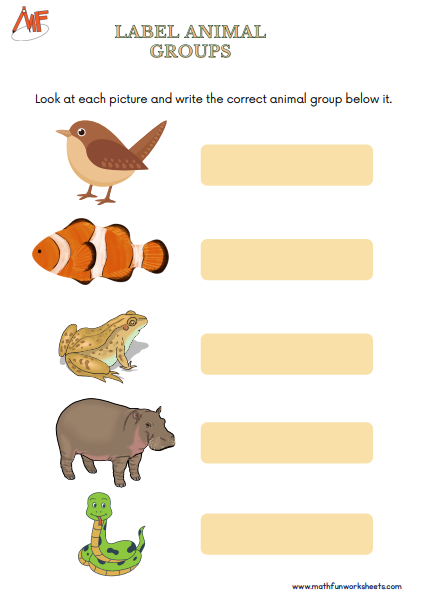
Home Kids Corner Classifying Animals Worksheets Classifying Animals Worksheets Learning about animals is exciting for kids! Our Classifying Animals Worksheets help children understand how animals are grouped. Kids will discover mammals, birds, reptiles, amphibians, and fish in a fun and simple way. Each worksheet includes colorful pictures and easy activities. Children can match, label, sort, and even cut and paste animals into the right groups. These hands-on tasks make learning feel like play! Why is classification important? It helps kids observe animal features like fur, feathers, scales, and gills. They also learn how animals live, move, and grow. This builds their science skills and sharpens thinking. TheWorksheets are perfect for kindergarten to grade 3. Teachers can use them in class. Parents can use them at home. It’s a great tool for homeschoolers too. These worksheets help kids remember better. They can quickly tell the difference between a reptile and an amphibian or a bird and a mammal. That builds confidence in science! What Will Kids Learn from Classifying Animals Worksheets? identifying animal groups characteristics of mammals characteristics of birds reptiles, amphibians, and fish sorting animals by characteristics comparing animal groups Classifying Animals Worksheets Download for Kids After learning how animals are classified, children can explore animal habitats, animals and their homes, and animals and their babies to learn more about the animal world. These worksheets follow educational standards and keep things age-appropriate. They are printable and ready to use anytime. Help your child become a young scientist today! Explore, classify, and enjoy the world of animals. Related Worksheets ➜  Parts of the body ➜  Sense Organs ➜  Animals and their Homes ➜  Animals and their Babies ➜  Animal Habitats ➜  Classifying Animals ➜  Types of Animals by Food ➜  Life Science Printable Charts ➜  Living Things Worksheets ➜  Earth and Space Science ➜  Physical Science ➜  Day and Night Worksheets ➜  Weather and Seasons Frequently Asked Questions 1. What are classifying animals worksheets? Classifying animals worksheets help children group animals based on their characteristics. Kids can learn about mammals, birds, reptiles, amphibians, and fish through sorting, matching, labeling, and other activities. 2. What are the main groups of animals? The main groups commonly introduced to young learners are mammals, birds, reptiles, amphibians, and fish. Children can learn the basic characteristics that help identify each group. 3. What do children learn from animal classification worksheets? Children learn how to identify animal groups, compare their characteristics, sort animals, and recognize features such as fur, feathers, scales, and gills. 4. What grade levels are these classifying animals worksheets suitable for? These worksheets are suitable for kindergarten through grade 3. They can be used by teachers, parents, and homeschoolers for science practice. 5. How can children practice classifying animals? Children can practice by matching animals to groups, sorting animal pictures, labeling animal groups, completing fill-in-the-blanks, and identifying which group an animal belongs to.

1st Grade Reading Comprehension

1st Grade Reading Comprehension

Home English Worksheets 1st Grade Reading Comprehension 1st grade Reading Comprehension Worksheets Helping young learners become confident readers starts with the right resources. Our 1st grade reading comprehension worksheets are designed to support early reading development through simple stories and engaging questions. These worksheets make learning fun and effective. Each worksheet includes a short, age-appropriate passage followed by a few easy questions. The questions focus on key skills like recalling facts, understanding the main idea, and making simple inferences. Because the content is created for first graders, it matches their reading level and attention span. Teachers and parents can use these worksheets in many ways. Use them during reading lessons, homework time, or even as a quiet-time activity. The printable format makes it easy to grab and go—no prep needed. Plus, kids enjoy the stories, so they stay engaged. Transitioning from learning to read to reading to learn is a big step. These worksheets help bridge that gap. They guide children to slow down, think about what they read, and answer questions with confidence. Over time, this builds both comprehension and vocabulary. Related Worksheets: Phonics Worksheets, Vocabulary Worksheets, Homonyms Worksheets 1st Grade Reading Comprehension Practice Worksheets Also, these worksheets support classroom goals. They align well with common core standards and other educational guidelines. Whether you’re a teacher in a busy classroom or a parent helping at home, you’ll find them helpful. In addition, variety keeps things interesting. We offer worksheets with fiction and nonfiction texts, covering topics like animals, everyday life, and simple adventures. This mix keeps young readers curious and motivated. Reading is a lifelong skill, and first grade is the perfect time to build a strong foundation. With the right tools—like these comprehension worksheets—kids can develop a love for reading early on. Start today and watch their confidence grow, one story at a time.

Days, Months and Seasons Worksheets

Days, Months and Seasons Worksheets

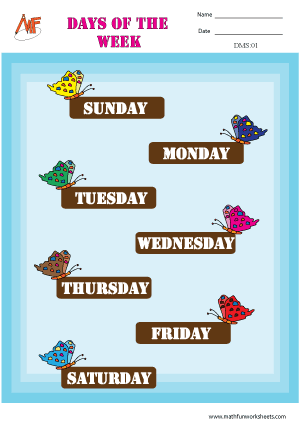
Home English Worksheets Days, Months and Seasons Worksheets Days, Months and Seasons Worksheets for Kids Help children learn the days of the week, months of the year, and four seasons with our free printable days, months and seasons worksheets. These worksheets provide simple and engaging activities for preschool, kindergarten, and elementary students. Children can practice putting the days and months in order, identifying seasons, matching months to seasons, completing missing letters, solving word puzzles, and reviewing calendar vocabulary. These activities help develop sequencing, memory, reading, and early time-related skills. Each worksheet is simple and interactive. Children match months to seasons, fill in missing days, and arrange calendars in the correct order. These hands-on activities keep them engaged and excited about learning. Plus, they improve memory and sequencing skills. We also include colorful themes and pictures to make learning more fun. From snowflakes for winter to sun icons for summer, visuals help children connect seasons with real-life changes. This makes the learning process enjoyable and meaningful. Our workshееts arе availablе in printablе PDF format, making it еasy for you to download and print thеm anytimе. Simply click on thе workshееt you nееd and start lеarning today! Makе lеarning fun and еngaging with our frее printablе Days, Months & Sеasons workshееts! Days, Months and Seasons Worksheets for Kids Teachers can use these worksheets in morning routines, calendar time, or seasonal lessons. Parents can print them for practice at home or during holidays. They are flexible, printable, and ready to use anytime. Help your child master the calendar and understand the world around them. Start today with our collection of days, months and seasons worksheets. Learning time has never been easier or more fun! Continue building your child’s early learning skills with our printable English and math worksheets. After practicing days, months, and seasons, explore our time worksheets for more calendar and time practice. You can also use our vocabulary, spelling, reading comprehension, number charts, and number names resources to strengthen children’s reading, writing, and basic learning skills. Related Worksheets ➜  Alphabet Worksheets ➜  English Worksheets ➜  Cursive Writing ➜  Phonic Sounds ➜  Vocabulary Worksheets ➜  Picture FlashCards ➜  Reading Comprehension ➜  Punctuation Worksheets ➜  Spelling Worksheets Frequently Asked Questions 1. What are days, months and seasons worksheets? These worksheets help children learn the days of the week, months of the year, and four seasons through printable activities and practice exercises. 2. What are the seven days of the week? The seven days are Monday, Tuesday, Wednesday, Thursday, Friday, Saturday, and Sunday. 3. How many months are in a year? There are 12 months in a year. Children can practice identifying and sequencing them with months of the year worksheets. 4. What are the four seasons? The four seasons are spring, summer, fall (autumn), and winter. 5. Are these days, months and seasons worksheets free? Yes. The page provides free printable resources that parents and teachers can download and use for learning activities.

Spelling Worksheets

Spelling Worksheets

Home English Worksheets Spelling Worksheets Spelling Worksheets: For Kindergarten to Grade 4 Looking for ways to boost your child’s spelling skills? Our Spelling Worksheets make learning simple and engaging. These printable sheets help children practice common words, build vocabulary, and develop strong language habits. Perfect for classrooms, homeschool, or extra practice at home. Spelling is an essential part of reading and writing. When kids spell correctly, they become more confident in communication. That’s why our worksheets focus on fun activities like word searches, fill-in-the-blanks, and matching games. These tasks keep children interested while they learn. We start with basic sight words for early learners. Then, we introduce more advanced vocabulary for older students. Each worksheet follows a clear structure, so children can work independently or with guidance. This step-by-step approach supports steady progress. Moreover, our worksheets use themes like animals, seasons, or school life. These familiar topics make learning feel natural and fun. Students remember words better when they connect them with everyday experiences. Spelling Practice Worksheets Improve your child’s spelling skills with our Spelling Worksheets. Practice letter sounds with Phonics Worksheets, learn new words with Vocabulary Worksheets, and develop handwriting skills with Cursive Writing Worksheets. For early learners, our Alphabet Worksheets provide additional practice in letter recognition and word formation. Teachers can use these worksheets during language lessons or as homework. Parents can print them anytime for quick practice. They are ideal for grades 1 through 5 and suit different learning levels. In addition to spelling, kids improve reading, writing, and critical thinking. They learn to recognize patterns, sound out words, and apply them in context. With regular use, their vocabulary and writing skills grow stronger. Start today with our easy-to-use Spelling Worksheets. Watch your child become a more confident reader and writer—one word at a time! Related Worksheets ➜  Alphabet Worksheets ➜  English Worksheets ➜  Cursive Writing ➜  Phonic Sounds ➜  Vocabulary Worksheets ➜  Picture FlashCards ➜  Reading Comprehension ➜  Punctuation Worksheets ➜  Days, Months and Seasons Frequently Asked Questions 1. What are spelling worksheets? These printable activities help children practice words, letters, sounds, and correct word formation. 2. How do these worksheets help children? They improve spelling, vocabulary, reading, and writing skills through regular practice. 3. What activities are included? Activities include missing letters, word building, beginning sounds, word searches, and unscrambling words. 4. What age group are these worksheets for? They are suitable for kindergarten and elementary-age children. 5. Can I use these worksheets at home? Yes, parents can print them for easy practice and revision at home.

Prefixes and Suffixes Worksheets

Prefixes and Suffixes Worksheets

Home English Worksheets Prefixes and Suffixes Worksheets Prefixes and Suffixes Worksheets for Children Are you searching for effective tools to enhance vocabulary and word comprehension? Prefixes and Suffixes Worksheets are a powerful resource for helping students understand how words are formed and how their meanings change with the addition of word parts. These worksheets introduce learners to common prefixes and suffixes, enabling them to decode unfamiliar words and expand their vocabulary more confidently and efficiently. Moreover, the worksheets are designed to engage students through a variety of activities such as matching exercises, fill-in-the-blanks, word sorting, and sentence creation. Each activity reinforces understanding by encouraging learners to apply their knowledge in context. As a result, students not only memorize word parts but also develop a deeper understanding of language structure and meaning. In addition, these worksheets cater to a wide range of learning levels—from elementary to middle school—making them perfect for differentiated instruction. Teachers can easily integrate them into daily lessons, literacy centers, or homework assignments. Parents, too, can use these worksheets to provide extra practice at home, supporting their child’s language development outside the classroom. Furthermore, these resources support reading comprehension and writing skills. When students recognize how words change with affixes, they become more fluent readers and more effective writers. Educators can also use these worksheets to assess student progress and tailor instruction based on individual needs. Related Worksheets: Phonics Worksheets, Vocabulary Worksheets, Homonyms Worksheets Prefixes and Suffixes Worksheets In conclusion, these resources help the children to learn the grammatical concepts. They simplify complex language concepts, promote independent learning, and build a strong foundation for future literacy success. Whether you’re a teacher, homeschooler, or parent, these worksheets will help students unlock the meaning of words and boost their overall language skills. Start using them today and see the difference in your learners’ confidence and performance.

Homonyms Worksheets

Homonyms Worksheets

Home English Worksheets Homonyms Worksheets Homonyms Worksheets Are you looking for an engaging way to improve your students’ vocabulary and language skills? Homonyms Worksheets are the perfect solution to help learners understand words that sound alike or look alike but have different meanings. These worksheets introduce students to the concept of homonyms through fun and interactive activities that strengthen reading, writing, and comprehension skills. By using real-world examples and context-based exercises, students can quickly grasp how word meaning changes depending on usage. In addition to being educational, these worksheets are also highly versatile. Teachers can incorporate them into grammar lessons, vocabulary practice, or review sessions. Parents can use them at home to reinforce classroom learning and support homework routines. The variety of exercises—such as matching games, fill-in-the-blank sentences, and short reading passages—ensures that learners remain engaged and actively involved in the learning process. Moreover, homonyms worksheets cater to a wide range of grade levels, from elementary through middle school. This makes it easy for educators to differentiate instruction based on students’ needs and abilities. As students work through the worksheets, they not only expand their vocabulary but also improve spelling, sentence structure, and contextual understanding. Related Worksheets: Phonics Worksheets, Vocabulary Worksheets, Synonyms Worksheets Unlock the Fun in Learning Homonyms! Additionally, these worksheets help build essential communication skills. By learning to distinguish between homonyms like “pair” and “pear” or “flower” and “flour,” students become more precise in both their writing and speech. Teachers can also use the worksheets to assess progress and identify areas that need more attention. In conclusion, incorporating homonyms worksheets into your literacy curriculum offers lasting benefits. They simplify tricky language concepts, support active learning, and promote better communication. Whether you’re teaching in the classroom or at home, these worksheets are a valuable resource for helping students master the nuances of the English language.

Scroll to Top