Math is an important skill that children use every day, from counting toys and sharing snacks to telling time and managing money. However, some children find math challenging when it is taught only through textbooks and repeated calculations. The good news is that parents can make learning math easier, more enjoyable, and more meaningful with simple activities at home.
If you are wondering how to help kids learn math at home, you do not need expensive learning materials or complicated teaching methods. Everyday objects, short practice sessions, educational games, and printable math worksheets can help children build confidence and develop essential math skills.
In this guide, you will discover practical ways to support your child’s math learning from kindergarten through Grade 5.
Practicing math at home gives children more opportunities to understand concepts at their own pace. It also helps parents identify areas where their children may need extra support.
Here are some benefits of regular math practice at home:
The goal is not to make children study for hours. It is to help them understand mathematical ideas through enjoyable and consistent practice.
Every child learns at a different pace. Before introducing new concepts, find out which skills your child already understands and which ones need more practice.
For younger children, begin with counting, number recognition, shapes, and comparing quantities. As they progress, introduce addition, subtraction, multiplication, division, fractions, decimals, measurement, and word problems.
Here is a general guide to math skills by learning stage:
These are general examples, not strict age-based requirements. Follow your child’s school curriculum and current level of understanding.
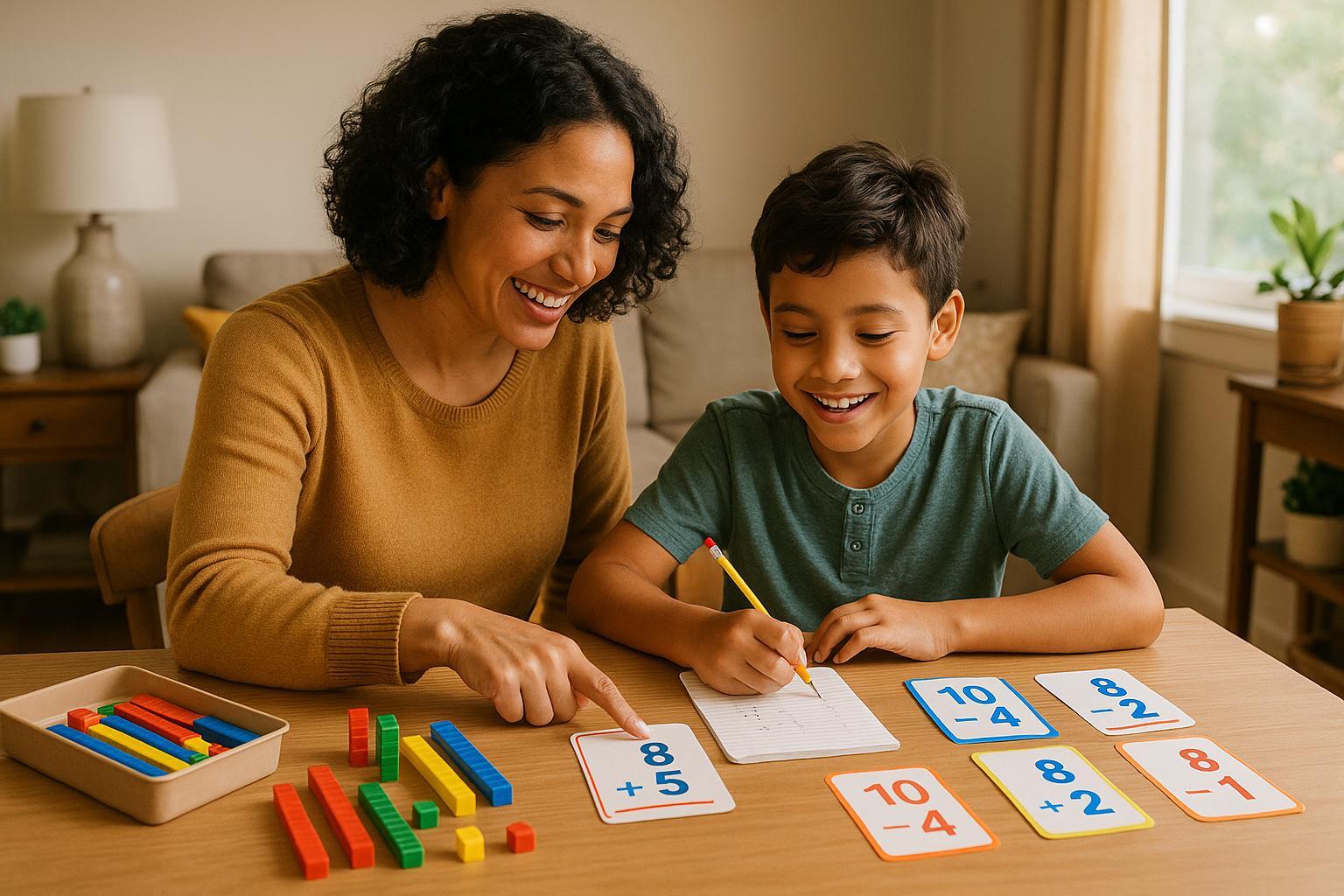
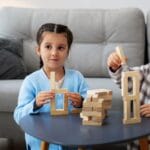
Children often understand math more easily when they can see and touch the objects they are counting.
You can use items you already have at home to demonstrate mathematical concepts.
Counting with toys
Ask your child to count toy cars, building blocks, pencils, or stuffed animals. You can also ask questions such as, “How many toys do we have?” or “What happens if we add two more?”
Addition and subtraction with snacks
Place five grapes on a plate and ask your child to add three more. Count the total together. You can also demonstrate subtraction by removing two grapes and counting what remains.
Learning shapes around the house
Ask your child to identify circles, squares, rectangles, and triangles in everyday objects. Plates, books, windows, and road signs can all become learning examples.
Measuring household objects
Use a ruler or measuring tape to measure books, tables, and toys. Compare which objects are longer, shorter, taller, or smaller.
These hands-on activities help children connect abstract math concepts with real experiences.
Math does not always have to involve writing answers on paper. Simple games can encourage children to practice essential skills while enjoying the learning process.
Try these activities:
Choose games that match your child’s current abilities. As your child becomes more confident, gradually increase the difficulty.
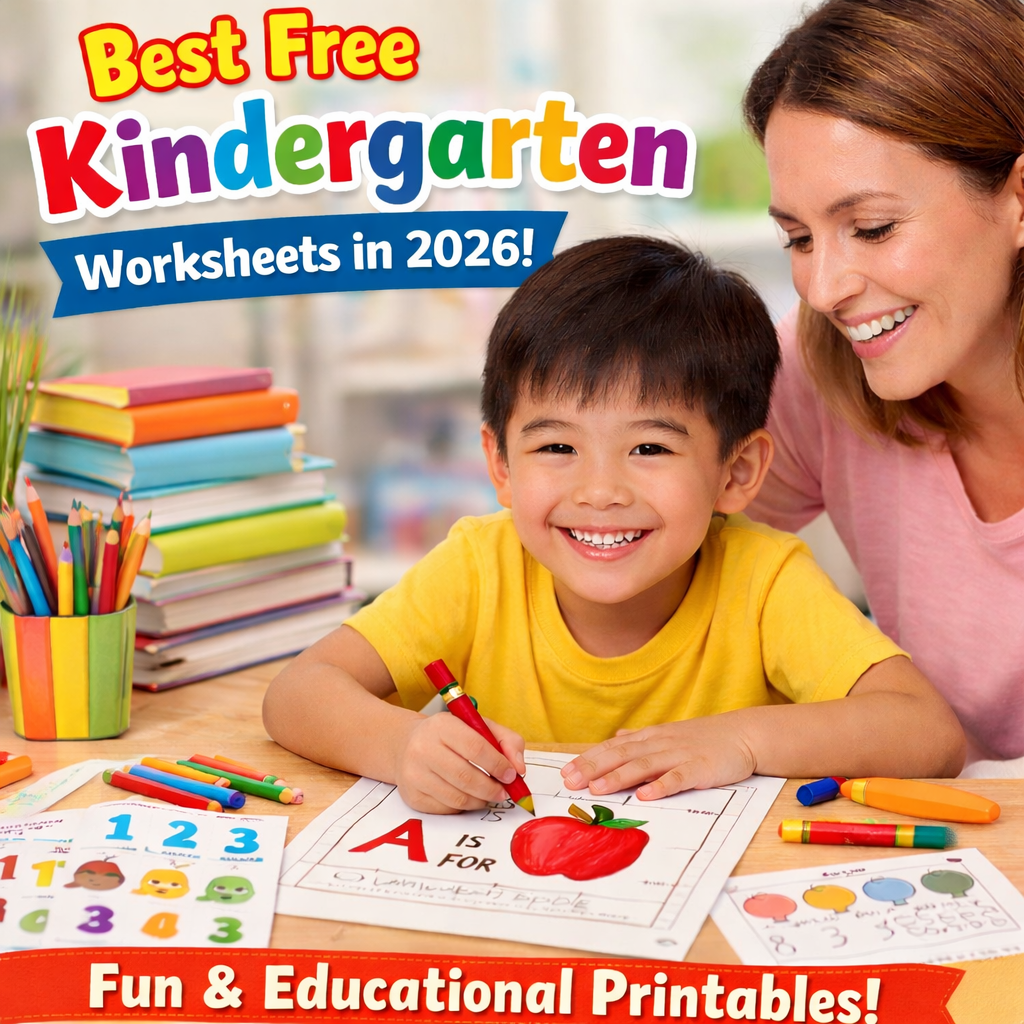
Printable math worksheets provide structured practice and help children reinforce what they learn through games and everyday activities.
They can be especially useful when children need repeated practice with a particular concept, such as addition, multiplication, fractions, or word problems.
When choosing worksheets, consider the following tips:
At MathFunWorksheets.com, parents and teachers can explore free printable math worksheets for a variety of elementary math topics.
Choose activities that support your child’s current learning goals:
Visit MathFunWorksheets.com to explore printable learning resources and find suitable activities for your child.
Helping kids learn math at home does not require expensive tools or complicated lessons. Everyday activities, educational games, visual examples, consistent practice, and printable worksheets can make math more engaging and understandable.
Start with your child’s current learning level, introduce concepts through real-life situations, and gradually build confidence through practice. Most importantly, make learning a positive experience where mistakes are opportunities to improve.
Looking for more ways to support your child’s math learning? Explore MathFunWorksheets.com for free printable math worksheets and educational activities designed to make learning more enjoyable.

Storytelling isn’t just about entertainment—it’s a transformative tool that enhances language, communication, and emotional intelligence. From building a stronger vocabulary…
Read more
With colorful images and captivating themes, children will delight in the challenge of matching pictures, fostering cognitive development and problem-solving…
Read more
With colorful images and captivating themes, children will delight in the challenge of matching pictures, fostering cognitive development and problem-solving…
Read moreCopyright © 2026 – Math Fun Worksheets